One of the biggest frustrations that comes with dog ownership is trying to establish how to stop dogs from digging. Our dogs bring lots of joy into our lives, but excessive digging problems can certainly put a strain on the owner-dog relationship.
How To Stop Dogs From Digging
Dogs dig for a number of reasons and it's important to keep in mind that your dog is not digging to spite you. If you don't clearly communicate to your dog that his digging is unacceptable behavior, he won't even realize that he is doing anything "wrong".
Why Do Dogs Dig Holes?
To learn how to stop dogs from digging holes it is crucial to determine the reason why your puppy or older dog is digging in the first place. Below is a list of the most common reasons your dog may be digging:
* He simply likes to dig!.
* Your dog may just seeking your attention.
* May be bored and digs for mental and physical stimulation. What do you expect a bored, lonely and isolated dog to do?
* If your dog is digging under the fence he may be trying to get out to search for a mate.
* Dogs often dig in freshly turned dirt (like your rose bed!).
* Dogs are often attracted to fertilized dirt - the smell of fertilizer is irresistible to some dogs.
* To dig themselves a den - much as they would have in the wild.
* For shelter, to cool themselves down or warm themselves up.
* Some breeds are very prone to digging (terriers, labradors), it is instinctual and bred into them.
* May be because your dog is hunting for some little critters that live in your garden.
* For food storage purposes. While you and me prefer to use the fridge, our dogs think the garden will do just fine.
How To Stop Dogs From Digging
Whenever you are trying to change any behavior in your dog the golden rule is to be consistent! Make it very clear to your dog what is, and is not acceptable behavior.
Once you have determined the likely reason for your dog's digging, you must then pinpoint the solution. Below is a list of proven techniques. If applied correctly they will help to control your dog's digging problems.
* Give your dog lots of exercise, including heaps of physical and mental stimulation. Your dog's energy must be burned off in one way or another so why not channel it into something positive?
stop dog from digging
* If your dog is always digging in order to bury a bone, don't give bones! Substitute with chewing toys like rawhide bones.
* Confine your dog when you can't supervise him. Place him in a crate, kennel run or indoors whenever you aren't around to spy on him. You'll need to do this until you have fixed the digging problem.
* Blow up some balloons and bury them in the area your dog likes to dig. When he strikes a balloon, the noise of it popping startles your dog. In some cases the negative association this produces is enough to stop your dog from digging in the future.
* If you are able to be around your dog for a couple of days, you could have some success with this method. Whenever your dog starts to dig, reprimand him and spray him with the hose. Again this method produces a negative association to your dog each time he digs. You must perform this reprimand every time your dog starts digging holes for it to be successful.
* If your dog has a favorite spot he likes to dig you can bury some chicken wire just under the surface of this area. When your dog starts to dig he won't like the feeling of his paws scraping along the wire. I've used this method myself, and found that it worked well for my dalmation puppy who loved to dig!
* This one doesn't sound very nice but is a very popular and effective way to stop your dog from digging. What you do is fill up the holes your dog has created, adding some of his poop (feces) to the filling. Most dogs are really put off by this and won't attempt to dig again. Some trainers advocate feeding your dog pineapple before performing this technique. Apparently the pineapple smells terrible when mixed with the poop.
* Some dogs just copy what they see their owners doing. So if you're working away in the garden, suddenly your dog may be interested in doing the same! Such dogs may need to be confined while you are working in the garden. This is probably another form of attention seeking behavior.
* If you've got the room a great solution for both you and your dogs is to provide them with a digging area. You can actually encourage your dog to dig in this designated area. Fill it with nice soft sand and bury some of your dog's favorite treats in it. Most dogs figure out that if they want to dig, they must go to this area. Check out this video which clearly shows how to create a digging area for your dog - Dog Digging Box.
* If your dog is digging under the fence it may be worth filling in all the holes in and under the fence. By blocking these outside distractions or triggers you take away the visual temptation that your dog may be trying to get at.
* If you take a trip down to your local Pet Shop you will find many commercial products that claim to help digging problems. They are effective for some dogs and may be worth a try if you can't manage the digging problem through training.
* A couple of other methods you may want to try to control dog digging are to provide a few tasty chew toys for periods you are away from home and also employing a dog walker.
Good luck with stopping your dog from digging, and remember that basic dog obedience training is the key to correcting any dog behavioral problems. If your dog respects and trusts you, he will be eager to please you in all situations.
To learn how to stop dogs from digging and how to successfully obedience train your dog at home visit Secrets To Dog Training.
Friday, 29 May 2009
How To Stop Dogs From Digging

Stop Dog Chewing Dog Behavior Training
Every dog owner will be required to stop dog chewing problems at some stage.

Dogs chew on just about anything they can wrap their mouths around. My dog's favorite chewing objects are socks, shoes, furniture and my whippet, Pocky actually chewed a large whole in the side of our house!
What Causes Dogs To Chew?
- Through loneliness or boredom.
- Separation anxiety, this form of chewing often occurs if you work long hours away from home.
- When they are teething (this can be a very trying time for owners).
- Through fear or a phobia.
- Seeking attention.
- Through anticipation, some dogs chew just before their owner is due to arrive home.
It's important that we stop our dogs chewing not only because it frustrates us, but also because it can be very dangerous for our dogs. If your dog chews into electric wires, poisons and any number of other objects they could be in serious danger. Having said this it should also be noted that chewing on appropriate items offers many benefits to the health and wellbeing of your dog.
Dog Chewing - Prevention Is Your Best Option!
As with most dog behavior problems it is far easier to prevent chewing problems from arising rather than trying to extinguish an established chewing habit. Try these simple steps to help manage your dog's chewing:
- Puppy proof your home - take away the temptation!
- Provide your dog with a few tasty chew toys. Make it perfectly clear to your dog that if he/she needs to chew, it must be on the chew toys. It's a good idea to toss a dog toy stuffed with some tasty treats to your dog as you leave for work each morning
- Keep your dog in a safe and confined area while you are away from home. This could be a dog crate, kennel run or any secure room in your house. Of course you should provide a few chew toys in this area and ensure that there are no dangerous objects present.
- Provide your dog with lots of exercise, both physical and mental when you are at home (games, obedience training, tricks...)
How To Stop Dog Chewing Problems
Always keep in mind that your dog can't tell the difference between a $200 pair of shoe's and a worthless old rag. And your dog is not chewing to spite you, dogs don't think like us humans.
- If your dog has a particular liking for a certain object like a furniture leg you can try this method. Coat the object with a foul tasting substance (non toxic) such as bitter apple, cayenne pepper or tabasco sauce. This method can be effective but because it doesn't actually teach your dog to stop chewing, it may mean that your dog just chews on a different object. Of course, if you put some tasty treats in the area, the chewing behavior will hopefully shift straight over to these.
- If you catch your dog in the act of chewing, give a firm "No!" and replace the inappropriate chewing object with a tasty chew toy. Give your dog praise when he starts chewing the toy. Never ever reprimand your dog if you don't actually catch him in the act of chewing. If you don't issue your correction within about two seconds of his chewing behavior, he won't have a clue what you are disciplining him for.
- A good solution to stop dog chewing and any other dog behavior problems is to apply some obedience training. This establishes you as the firm but fair leader in your owner-dog relationship. It will also help to build a strong bond between you and your dog, based on trust and mutual respect. To learn how to properly obedience train your dog at home visit Secrets To Dog Training Chewing Problems.
- Teach your dog the "Leave It" obedience training command.


In order to control your dog's annoying chewing habit all you need to do is consistently follow the above training methods. Add a touch of common sense and patience and you will be well on your way to stopping your dogs chewing problem.

Dog Behavior Training - Proven Techniques To Help Solve Problem Behaviors
At some point in time all of us dog owners need to administer some dog behavior training (or behavior modification).
There are loads of dog behavior problems, they can affect all dog breeds, at any time throughout your dog's life. I've listed some of the more common dog behavior problems below, and importantly some proven dog behavior training methods to correct them. I will continue to add to this resource over the next few months. Hopefully this information proves to be a valuable resource for you - and your dog.

General Principles For
Dog Behavior Training
I expand further on these rules within the specific behavior problems listed below.
- A great number of puppy and dog behavioral problems are the result of separation anxiety.
- Many behavior problems (such as barking, biting & digging) stem from a lack of communication, or miscommunication between you the owner and your dog. Simply put, your dog is not aware of what is expected of him/her (I'll just say him from now on to make it easier).
- Applying some proper obedience training at an early stage is a most effective technique to correct any behavior problems, and also to prevent any future problems. The fact that you are reading this page possibly means it is too late for this tip!
- Set boundaries of acceptable and unacceptable behavior for your dogs, and stick to them. Be consistent, make it simple for your dog:
- Be clear that you are always the alpha dog or leader in your owner-dog relationship.
- Make it clear to him what is unacceptable behavior - every time.
- Make it clear to him what is acceptable behavior - every time.
- Even though it may seem as though your dog is behaving poorly to spite you or annoy you this is not the case. In the vast majority of problem behavior cases there will be a cause or trigger which sparks the behavior. Identifying these triggers is the crucial first step towards solving the problem.
- Be careful you are not inadvertently rewarding the very behavior you are trying to eliminate. An example of this would be if your dog is barking excessively outside, you then go to the door and call him inside. You're encouraging and rewarding the behavior, and he is sure to do it again!.
Dog Behavior Training Can Make An
Enormous Difference To Your Dog's Life
It's a sad fact of life that the vast majority of dogs that end up in animal shelters (or worse) are there because of a bad behavioral problem. It doesn't have to be this way, most problems (like aggression and destructive behavior) are at least manageable through proper dog behavior training.
If you consistently apply the proper training techniques and add some commitment and patience, you will achieve pleasing results with your dog.
The http://www.dog-obedience-training-review.com
All Dogs Need Puppy Socialization
What Is Puppy Socialization Anyway?
When people talk about puppy socialization they are generally referring to the first 16 weeks of a dog's life. This is the window of time in our puppy's lives that determines who they will become as adult dogs. The temperament, character and behavior habits of your puppy are developed during this socialization period - and will last a lifetime. It affects how your puppy will relate to his family, strangers, animals and the environment in which he lives.
Puppy socialization stimulates the five senses of your young dog. It is the introduction, exposure and desensitization to the sights, sounds, smells, tastes and touch of everyday life. The socialization period conditions your puppy to the many different situations he needs to be familiar with and comfortable around. It also prepares him to deal with the new experiences and challenges which inevitably arise throughout life in an appropriate manner. Puppy socialization is the crucial stage where you begin to build the close bond you share with your dog, one that will last forever. It's up to you - any puppy can become a well adjusted and trusted member of society through proper socialization.
We owe it to our puppies to provide them with thorough socialization and training - all dogs need to be socialized regardless of breed type, where you bought the puppy from or anything else you may think of.
There are two main types of puppy socialization:
Active - Things we purposely introduce to our dogs like obedience training, visiting new people and rides in the car.
Passive - What your puppy comes across in her own time like exploring the plants in the back yard.
Note: Always check with your Veterinarian prior to starting your puppy socialization. Socializing your puppy is a balancing act between the need for your puppy's education and experience against the necessity of safeguarding him from disease.

Why Is It So Important To Socialize Our Puppies?
- The puppy socialization period (especially the first 16 weeks) is the most critical time for shaping your dog's future temperament, character and behavior habits. If you miss out on socializing your puppy during this period you cannot simply go back and fix the problems later.
- Preventing problems through proper socialization is a much more attractive alternative than trying to correct the undesirable behavior (barking, object guarding, chewing, separation anxiety, dog to dog aggression etc.) that arises from a lack of socialization.
- Puppy socialization is an essential ingredient in building and strengthening the bond you will share with your dog throughout his life. The time you put in now will be well rewarded.
Unsocialized Puppies Take A Very Different Path In Life Than A Dog Who Is Properly Socialized
- Socializing your puppy has an even bigger influence over her behavior than the breed of dog (boxer, beagle etc.) she is - it's that important.
- A socialized puppy is well placed to think, learn and problem solve (including obedience training), where's a fearful stressed dog (unsocialized) is severely restricted in this area.
- A well socialized dog will happily accept change, new people, challenges and will interact appropriately with other animals.
- Puppy socialization prepares your puppy for the hustle and bustle of everyday life. Things like the vacuum cleaner, dishwasher, lawn mower, cats, TV and whatever else life throws at him.
- Puppy socialization educates your dog about appropriate social interaction and how to inhibit aggression towards people and other animals.
- Socialization feeds all of the senses and safely, positively promotes emotional and mental stimulation.
What Happens If You Don't Properly Socialize Your Puppy?
- An unfortunate but undeniable fact is that the number one reason why dogs end up being euthanized is through a lack of socialization (from the associated problems that arise). The sad part is that socializing your puppy isn't really that difficult.
- If you miss the crucial puppy socialization period it's not something you can catch up on later - you have deadlines you must meet!
- You end up with a dog that is an outcast to society, one that doesn't fit in and can't be trusted. Sadly there are many dogs in this very situation living out their days permanently confined to the back yard.
- Dogs who miss the critical socialization period often exhibit shyness, aggression, timidity, fear towards people, dogs and other animals. They are also often inept at relating with other dogs.
- If your puppy is deprived of early social stimulation the result is her physical and emotional health can be irreversibly compromised.
- Unexpected events and new experiences are not well received by unsocialized dogs. What we strive for in our dogs is a happy balance between them being cautious and having the confidence to accept and explore new things.
When Does The Puppy Socialization Period Begin?
Pretty much the moment your puppy comes into this world the socialization and habituation window is open.
- The mother of your pup begins the socialization process through massaging your puppy with her tongue to control his elimination, also through sound, smell and body language. She is also responsible for giving your puppy his first lesson in discipline.
- Litter mates (siblings) learn from each other through play time and social interaction. They discover many aspects of being a dog including how to inhibit their bite and also the language of dominance and submission.
- The breeder plays a crucial role in the first 7-8 weeks of your puppy's life. He/she should handle the puppies during this critical period, getting them used to human scent and touch. A good breeder will also begin to get your puppy accustomed to proper household etiquette, noises and basic training.
How Do I Socialize My Puppy?
Ideally at about the 8 week mark your puppy will arrive at your home, which will be his home for life. Your responsibility to provide him proper socialization starts immediately, you're in control, it's in your hands. This is the beginning of the primary socialization window - make the most of it!
Note: Avoid any situations during this first couple of weeks at home that will scare your puppy (often called the fear impact period). Any major scare (like an aggressive dog approaching) can emotionally damage your pup forever.
- Puppy house training, crate training and chew toy training should commence as soon as your new housemate arrives. This is all part of the puppy socialization process, it establishes proper household etiquette, reinforces desirable behavior and prevents bad habits from forming.
- Pick your puppy up, stroke her belly, touch her all over while gently talking to her. Also invite other people to do the same.
- For your dog's safety and to establish a close bond it's important to begin some obedience training right away. Teach some basic commands such as sit, down, stay and the recall. This do it yourself training package will show you how to do it the right way yourself at home - SitStayFetch.
- Involve your new puppy in everything you can (isn't this why you got your puppy in the first place?), always under close supervision. Just get her familiar and comfortable with all of the daily routines and happenings of her new household. This is her environment now, we want her to be relaxed and comfortable around things like the vacuum cleaner, dishwasher, TV and noisy children.
- It's essential that your puppy meets as many people as possible before he reaches 12 weeks of age. As his vaccinations won't be completed by this stage, it's best if the people come to him. Always make visits a fun, non-threatening experience for your little pup. Encourage play, treats and touch between your visitors and your puppy. If you're game you can also visit some friends with immunized and trustworthy cats or dogs.
- Groom your dog, bathe her and clip her nails.
- Allow your puppy to explore your home, inside and out. Continue to supervise him but allow him to check things (pot plants, lawn mower, toys etc.) out for himself.
- Take your puppy for a boat ride, in an elevator or to the Vet. Anywhere you expect he may need to go as an adult you should expose him to it now - in a safe, non threatening and controlled fashion.
- Give your puppy some new toys and play some games with him. Anything that stimulates his mind and makes him problem solve is brilliant for his development. You can play games of hide and seek or build some obstacle courses for him to navigate his way through.
- Take your puppy with you on short car trips. Visit some friends or sit at the train station and watch some trains roll by. I don't recommend off leash dog parks as it's hard to know which dogs are vaccinated and of sound temperament. As I mentioned earlier a bad experience during the socialization period can scar your puppy for life.
- Once the final canine vaccination shots are done it is a great idea to get along to a good puppy kindergarten. Your puppy will continue to develop her social skills (bite inhibition) in a friendly and safe environment.
- As soon as the final vaccinations are completed you can start to get out and about even more. Take your puppy on walks to meet with other dogs, cats and other animals. Also encourage people to come up and pet your puppy while on walks. I still like to avoid off leash dog parks - they're too risky for my liking.

Apart from all of the puppy socialization tips listed above it's important to remember to always have fun with it. Puppy socialization is a fun time, you'll get great pleasure out of watching your pup experience new things for the first time. Enjoy it.
The http://www.dog-obedience-training-review.com
The Best Dog Food What Are Your Options?
What Is The Best Dog Food - My Conclusion
Deciding on the type of dog food you provide is one of the most important decisions you will ever make for your puppy or older dog. Dog food nutrition directly influences every aspect of your dog's life. Things like how puppies grow, their behavior habits, health, overall well-being and appearance are all closely connected to the nutrition we provide - it's a big responsibility.
With all the recent publicity and concern with the dog food recall of 2007 the spotlight has been aimed fairly and squarely at the big commercial dog food companies. Us dog lovers are finally becoming more aware and educated about providing wholesome, nutritionally balanced meals for our dogs. So where do we start in our search to find the best dog food? What are our options, and who can we trust or even believe?
Is "Premium Dog Food" the answer we've been searching for or "Natural Dog Food" or how about "Healthy Dog Food"? Maybe the best dog foods are "Holistic", "Organic" or even "Lite"? And then there's "Human Grade All Natural" - does anyone actually know what all these fancy terms mean? And what about "Raw Dog Food"? Is it what our dogs require, or is it dangerous? How about "Raw Meaty Bones"? Are bones safe? Maybe we have to prepare all of our dog's meals from scratch to ensure its quality and nutritional value?
Choosing the best dog food can be an overwhelming decision - but why does it have to be so hard? I know from personal experience it can be difficult to see through all of the conflicting views, hype, marketing tactics and secrecy surrounding the dog food industry. After years of experimenting with different dog foods and lots of research I have reached an unfortunate conclusion. I feel that the vast majority of the big commercial dog food companies are far more focussed on extracting the money from our pockets rather than the health and wellbeing of our precious dogs.
So when I set out to determine the best dog food available my main focus was always the health, vitality and longevity of my dogs - I want my dogs to thrive. I hope this article will help you to determine the very best dog food for your dogs and make your feeding decision clearer.
The Benefits Of A Healthy,
Well Balanced & Nutritious Dog Food Diet
A wholesome well balanced dog food diet promotes: Healthy skin and coat, strong well developed bones, bright clear eyes, firmer stools (and less of them), well defined muscle tone, quality of life and longevity, healthy teeth and gums, fewer trips to your Vet, no bad odor, fewer digestive problems, energy, vitality, fewer behavior problems and over-all health.
How Does A Poor Diet Affect Your Dog?
A poor diet leads to an increase in: Cancers, weakened immune system, liver failure, sluggish behavior or hyperactive, putrid gas, diarrea, dull coat and heavy shedding, epilepsy, vomiting, ear infections, compromised heart and kidneys, stunted growth and weakened bones, bad breath, bowel disease, diabetes, cystitis, cataracts, hypertension, build up in the eyes, arthritis, countless allergies and who knows what else...
What Are The Choices - What Should We Feed Our Dogs?
In my search to find the best dog food available I have narrowed our options down to three broad groups. I've listed them here with a brief explanation and expand on all three further down this page.
1. Commercial Dog Food: This includes the packaged foods you find at your local supermarket, pet store or veterinarian. Commercial dog food is available in dry, semi dry and wet (canned). All the big names that we know so well are represented in this group, such as Diamond dog food, Pedigree, Iams and Science Diet. Is the best dog food located in this group? Not likely.
2. Raw Dog Food: This is the group growing in popularity. It includes the raw dog food and bones you prepare yourself or pre-packaged diets like BARF and Steve's Real Food 100% natural dog food diet.
3. Homemade Dog Food: Anything you put together yourself at home. Is following good homemade dog food recipes the best choice for our dogs?

Commercial Dog Food - A Look Below The Surface
This category of dog food is by far the most popular choice amongst us dog owners. Commercial dog food is so convenient and reasonably priced - but what are the long term implications of feeding it to our dogs, and is it really value for money?
The sad truth is that most of these commercial dog food products (regardless of what fancy name is printed on the label) are rubbish - these big companies are taking us for a ride. It's bad enough that they are happy to deceive us and rip us off blind, but the thing that really gets to me is that they appear to have no regard whatsoever for the health or wellbeing of our dogs.
Not all commercial dog foods are killing our dogs - just most of them. Most of these products are woefully deficient in key nutrients and are chock full of toxic rubbish and fillers (like grain) that provide no nutritional benefit to our dogs. Some of the ingredients hiding behind the laughably inept labeling laws and fuzzy feel good marketing tactics are: Indigestible waste products, colors, dyes, toxins, pesticides, chemicals, harmful preservatives (BHA, BHT and Ethoxyquin) and antibiotics. It doesn't stop there, then you've got a wide range of dead, diseased, disabled or dying animals prior to their visit to the slaughter house added to the mix. You may even find some so called animal "by-products" and some recently euthanized pet cats or dogs. Basically all of the rubbish that other industries can't or won't use can end up in your dog's dinner bowl. To top it all off any nutrition that is present in this toxic cocktail is then ruined by the cooking processes used.
Just imagine if you or I were able to lay all of the contents of a typical commercial dog food product out on a table in front of us. I've got no doubt we would be at first surprised, then disgusted and angry - have you ever tried to read the label on a can of dog food?
Thankfully not all dog food companies take us for ignorant fools. Some have even realised that we are capable of looking beyond the hype and doing some research of our own - some may even care about our dogs. Andrew Lewis has recently conducted a detailed study into the merits of commercial dog foods. He has now identified 9 brands of commercial dog food that passed his strict criteria and are safe to feed to our dogs. I can't divulge his findings here for copyright reasons (which is fair enough considering that Andrew put in all the time, resources and money to discover the truth). What I can tell you is that I feed two brands of commercial dog food to my dogs - I still do even after reading Andrew's special report;). I feed Wellness (a couple of different varieties) 

Raw Dog Food
The raw dog food diet is the growth sector within the dog food marketplace. This category includes the raw food you source and prepare yourself or the pre-made and packaged products like Dr. Billinghurst's BARF raw food diet (evolutionary diet) and Steve's Real Food for dogs.
Raw dog food is a fairly broad term as there are many variations on this feeding method. The common thread with raw food enthusiasts is that they believe feeding raw is the most natural way to feed a dog. Raw foodies believe that this is the way dogs have successfully evolved and that eating a raw diet is the way nature intended dogs to get their nutrition. The raw food diet is said to replicate how a dog would eat in the wild. A raw dog food diet is sometimes referred to as an "all natural" diet as ingredients are generally free from chemicals, preservatives, additives, by-products and fillers (like worthless grains).
Some raw food proponents love to give big meaty bones and others won't. The same applies with fruit and vegetables - some people say that vegetable matter is a natural part of a wild dogs diet, gathered from the stomach of their prey. The following is an example of the real whole foods that are included in a raw dog food diet. These ingredients are usually organic or all-natural produce: Chicken, lamb, pork, salmon, turkey, kangaroo, rabbit, quail and organ meat. You may also find raw meaty bones and a long list of fresh fruit and vegetables. Plus you'll find nutritious ingredients such as eggs, kelp, yogurt, flax seed meal and other supplements. Compare this list to what you read on a commercial dog food label - there's no comparison.
Raw foodies argue that a raw food diet provides the enzyme rich nutrients and amino acids in a perfect unaltered state - which is easily digested. They believe that the raw dog food diet leads to fewer visits to the Vet, strengthened immune systems and less allergy and disease. They also point to the over-all health and appearance of their dogs for proof that the raw diet is the right way to go. Raw foodies report increased longevity and reproductive capacity in their dogs. Another benefit of feeding raw is healthy teeth and gums and well developed jaws, neck and shoulder muscles (from all the chewing).
On the other hand detractors of feeding raw focus on the danger of foodborne illness through the threat of bacteria like salmonella and E. coli. Some also say that it is difficult to feed a nutritionally balanced meal the raw way.
One tip I would suggest if you are considering the raw feeding option for your dogs is to go out and visit a breeder or friend who already feeds a raw dog food diet. Have a chat with them and take a really good look at their dogs - the health of our dogs is always what matters most.
Homemade Dog Food - Dog Food Recipes
With all the recent news about the dog food recall and associated concerns with commercial dog foods, the homemade dog food option has really come to the fore.
Preparing your dog's meals from scratch has many benefits, including the complete control of all meals served. You know exactly what goes into every meal (and where it was sourced) and you also know that it has been prepared in a clean environment.
It does take an organized person to set up a homemade feeding plan and then prepare all of the daily meals. The homemade dog food option also comes with the added responsibility of formulating nutritionally balanced meals (proteins, vitamins etc.) and meeting the calorie requirements for your individual dog. If you arm yourself with some good dog food recipes and get into a routine this process is not all that difficult to maintain.
Typical homemade dog meals include big meaty stews, healthy soups, pies, vegetables and maybe some raw bones every now and then.
For hundreds of well thought out and nutritionally balanced dog food recipes read this resource - Dog Food Secrets. You'll also learn how to calculate the calorie requirements of your dog and discover all of the foods you must avoid feeding. Many dogs who have previously had skin allergies or other common complaints have thrived when switched over to a good homemade dog food diet.

My Experience & Recommendation
Ok so what does all of this mean? Many people ask what the best dog food is and what I feed to my own dogs. To be honest if I had the time (was more organized) I would prepare all of my dog's meals from scratch and add lots of raw meaty bones to their diet. But for the moment I feed my puppies Wellness (they love it)
For further research into the best dog food to feed your dog I recommend this ebook - Dog Food Secrets. This package includes which foods you must avoid, the commercial dog foods that are high quality, dog food reviews, dog food comparisons, your dogs nutritional requirements, a calorie chart, the best brand of dog food and loads of tasty dog food recipes.
The http://www.dog-obedience-training-review.com
Saturday, 9 May 2009
Choosing A Dog Training School
The benefits associated with going to a good dog trainer or dog training school are enormous. Your dog's health, wellbeing and behavior are determined by the training you provide. Plus obedience training helps to build and strengthen the close bond you and your dog will enjoy.
A trained dog is so much better off than an untrained one. The number one reason why we have such a large number of dogs ending up in animal shelters and being destroyed is various behavioral problems. Problems that in many cases can easily be prevented or extinguished through some obedience training.
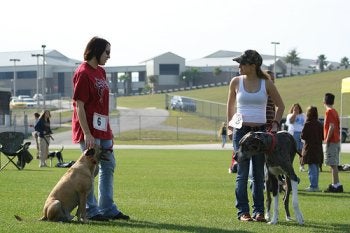
How To Choose A Great Dog Training School
* One of the first and most important criteria for choosing your dog training school is the training style they employ. Look for a class that uses humane, non violent dog training methods. Look for trainers who encourage and reward desirable behavior in their students rather than by using intimidation and heavy handed punishment. Consider a clicker training class that relies on repetition, cooperation and positive reinforcement to achieve the desired result.
* Check out the credentials, accreditation and experience of the trainers. Also it's important that trainers continue to learn and further their skills. Most important when choosing a dog trainer is that you determine if they have a genuine love of dogs and enthusiasm for the task at hand. Or are they training dogs because they love the species or are they just going through the motions like it's some 9 to 5 dead end job?
* Go and have a look at a few classes before making your decision. Most dog training schools will welcome this and even expect it of their potential clients. Make note of the equipment used in classes, the class sizes, general atmosphere (should be fun!), cleanliness and safety.
* Check out the success stories, testimonials and references of the dog training schools you are considering. Do they have happy and satisfied clients?? A great source of information and feedback can be unearthed by speaking with your Vet, your dog groomer or talking with dog lovers at dog shows or your local dog park.
* Work out what you expect from going to dog training school and write down any goals you have for your dog. Then match this up against the class schedule offered at your local schools.
* Check that the schools take vaccinations seriously - especially if you are going to a puppy kindergarten class. You should be asked for proof that your dog has been properly vaccinated and is up to date with all shots.
* Can you get one on one support if needed? This may be important to you and your dog at some stage. You need to be the person training your dog but sometimes it is handy to get some individual help. Something to keep in mind is that dog training is not an intuitive process, you need to be educated how to do it by someone who is properly trained and experienced.
* Other factors of less importance are the location of the school and also the price of the lessons. What you spend in terms of both time and money will be well and truly paid back by the benefits gained through obedience training.
Good luck in finding a suitable dog training school for you and your dog. Once you settle on a school that you believe is a good fit then the hard work will begin! Remember that training your dog is not something you do once a week when you go to class, it should be an ongoing process that you build upon each and every day.
Training your dog is crucial for your dog's health, behavior and wellbeing. The food you feed to your dog also plays a vital role in your dog's life - what is the best dog food?
The www.dog-obedience-training-review.com
Tuesday, 5 May 2009
Crate Training Your Dog

Crate Training is one of the most efficient
and effective ways to train a puppy or dog.
The single most important aspect of dog and puppy training is that you reward and praise your dog or puppy each and every time she does the right thing. For example: praise her when she chews her own toys instead of the couch or eliminates outside instead of in the house. The more time you spend with your puppy or dog, the quicker and easier it will be to train her.
The key to house training is to establish a routine that increases the chances that your dog will eliminate in the right place in your presence, so that she can be praised and rewarded; and decreases the chances that your dog will eliminate in the wrong place so that she will not develop bad habits.
It is important that you make provisions for your dog when you are not home. Until your dog is housetrained, she should not be allowed free run of your house. Otherwise, she will develop a habit of leaving piles and puddles anywhere and everywhere. Confine her to a small area such as a kitchen, bathroom or utility room that has water/stain resistant floors. Confinement is NOT crate training.
What is Crate Training?
Crate training can be an efficient and effective way to house train a dog. Dogs do not like to soil their resting/sleeping quarters if given adequate opportunity to eliminate elsewhere. Temporarily confining your dog to a small area strongly inhibits the tendency to urinate and defecate. However, there is still a far more important aspect of crate training.
If your dog does not eliminate while she is confined, then she will need to eliminate when she is released, i.e., she eliminates when you are present to reward and praise her.
Be sure to understand the difference between temporarily confining your dog to a crate and long term confinement when you are not home. The major purpose of confinement when your are not home is to restrict mistakes to a small protected area. The purpose of crate training is quite the opposite.
Short term confinement to a crate is intended to inhibit your dog from eliminating when confined, so that she will want to eliminate when released from confinement and taken to an appropriate area. Crate training also helps teach your dog to have bladder and bowel control. Instead of going whenever she feels like it, she learns to hold it and go at convenient scheduled times.
Crate training should not be abused, otherwise the problem will get drastically worse. The crate is not intended as a place to lock up the dog and forget her for extended periods of time. If your dog soils her crate because you left her there too long, the house training process will be set back several weeks, if not months.
Your dog should only be confined to a crate when you are at home. Except at night, give your dog an opportunity to relieve herself every hour. Each time you let her out, put her on leash and immediately take her outside. Once outside, give her about three to five minutes to produce.
If she does not eliminate within the allotted time period, simply return her to her crate. If she does perform, then immediately reward her with praise, food treats, affection, play, an extended walk and permission to run around and play in your house for a couple of hours. For young pups, after 45 minutes to an hour, take her to her toilet area again. Never give your dog free run of your home unless you know without a doubt that her bowels and bladder are empty.
During this crate training procedure, keep a diary of when your dog eliminates. If you have her on a regular feeding schedule, she should soon adopt a corresponding elimination schedule. Once you know what time of day she usually needs to eliminate, you can begin taking her out only at those times instead of every hour. After she has eliminated, she can have free, but supervised, run of your house.
About one hour before she needs to eliminate (as calculated by your diary) put her in her crate. This will prevent her from going earlier than you had planned. With your consistency and abundance of rewards and praise for eliminating outside, she will become more reliable about holding it until you take her out. Then the amount of time you confine her before her scheduled outing can be reduced, then eliminated.
Mistakes and Accidents During Training
If you ever find an accident in the house, just clean it up. Do not punish your dog. All this means is that you have given her unsupervised access to your house too soon. Until she can be trusted, don't give her unsupervised free run of your house. If mistakes and accidents occur, it is best to go back to the crate training. You need to more accurately predict when your dog needs to eliminate and she needs more time to develop bladder and bowel control.
The www.perfectpaws.com


 Posts
Posts


